
.jpg)
Guests rarely analyse why a place feels luxurious during their first moments inside it, yet their perception forms instantly through proportion, spatial hierarchy, and compositional control rather than through decorative richness. Before noticing colour palettes or curated objects, the body registers whether volumes relate correctly, whether circulation flows naturally, and whether light interacts with surfaces in a coherent way. When these structural decisions align, comfort appears without effort and trust develops instinctively. Beauty then emerges as a consequence of equilibrium, not as its cause. Luxury hospitality operates through spatial discipline that reduces tension and stabilises perception. When architecture expresses internal logic, guests experience calm and assurance long before they articulate admiration for design.
Proportion governs how the body occupies space and how the eye interprets scale, and this relationship determines emotional stability more than ornament ever can. Ceiling height, room depth, window alignment, and furniture placement must relate to each other with precision so that nothing feels exaggerated or constrained. When spatial dimensions align with human scale and movement, guests experience comfort before they consciously evaluate visual details.
At The Opposite House Beijing, volumes remain generous yet controlled, and transitions between public and private zones follow a disciplined hierarchy that reinforces orientation. Double height spaces feel expansive without overwhelming, while guest rooms balance openness and intimacy through measured proportions. The resulting equilibrium generates an immediate sense of assurance that precedes aesthetic appreciation.
Luxury hotels organise space through clear progression, allowing guests to move from arrival to reception to accommodation without disruption in rhythm. When entrances, corridors, and suites follow a consistent scale logic, perception remains stable and expectations align naturally with experience.
At Park Hyatt Sydney, spatial sequencing from harbour frontage to interior lounges respects both landscape context and human scale. Views anchor orientation while architectural framing preserves intimacy, and this balance produces emotional steadiness that guests perceive as refinement.
Spaces that open excessively can dilute intimacy, while compressed volumes can generate tension and unease, making calibration essential to perceived luxury. Architectural balance depends on measured relationships between enclosure and exposure, ensuring that openness enhances experience rather than destabilises it.
The Legian Bali aligns expansive ocean views with grounded interior proportions, framing the horizon without sacrificing shelter. Suites integrate openness with containment in a way that preserves equilibrium, allowing guests to feel secure even within generous volumes.
.jpg)
Material selection influences perception when texture, weight, and tonal contrast align with spatial proportion, reinforcing unity rather than competing for attention. Guests interpret harmony in materials as evidence of control and intention, while excessive layering or contrast can fragment experience.
At The Temple House Chengdu, stone, timber, and metal interact through disciplined contrast that supports architectural rhythm. Surfaces complement volume rather than dominate it, and transitions between materials follow a coherent logic. Guests perceive structural integrity because materials reinforce the underlying order of the space.
Rhythm appears when structural and material elements repeat with subtle variation, creating continuity that supports orientation and emotional steadiness. Columns, beams, window frames, and floor patterns generate cadence when aligned intentionally.
The Greenwich Hotel organises interiors through recurring architectural cues and consistent material language, allowing texture and structure to guide perception gradually. This controlled repetition produces a sense of grounded refinement that guests associate with luxury.
Luxury communicates credibility when materials express authenticity and coherence rather than decorative abundance. Over accumulation of textures or finishes can disrupt equilibrium and weaken trust.
At COMO The Treasury Perth, heritage stonework integrates with contemporary finishes through measured detailing that preserves harmony. Each surface feels intentional and aligned with architectural scale, strengthening the impression of stability and maturity.
.jpg)
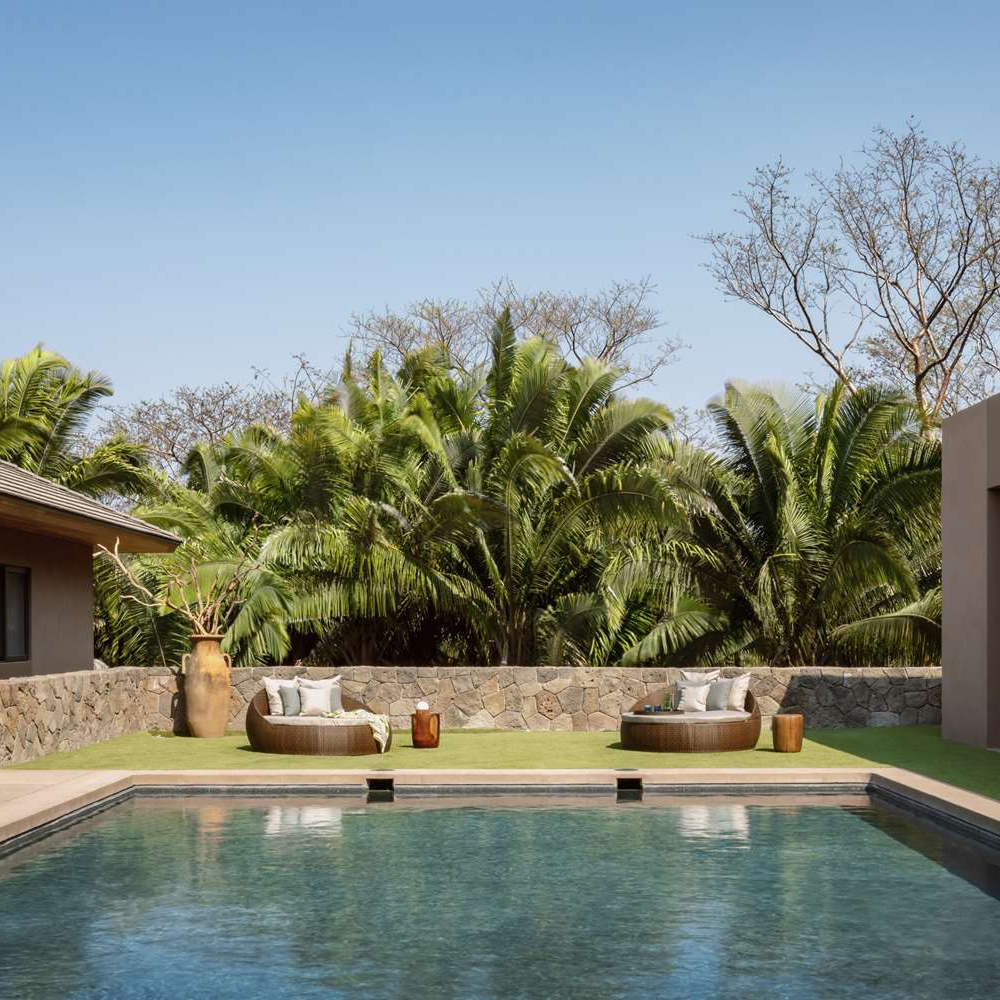
Guests respond to balance instinctively because structural harmony reduces cognitive effort and supports emotional ease before any conscious judgement forms. When volumes align, materials converse coherently, and spatial rhythm remains stable, perception settles into trust and comfort. Aesthetic appreciation follows as a natural outcome of this equilibrium.
At One&Only Mandarina, architecture integrates landscape and built form through calibrated composition that respects topography and proportion. Elevated structures, controlled glazing, and grounded materials establish equilibrium that guests feel immediately upon arrival. Beauty appears as the visible expression of disciplined alignment rather than visual intensity.
Luxury therefore depends on structural balance rather than decorative display. Harmony in proportion, material, and rhythm generates comfort and trust before aesthetic admiration emerges, and this equilibrium defines the true foundation of refined hospitality design.
Epikure collaborates with hospitality leaders to translate positioning into architectural hierarchy and experiential coherence, ensuring that balance shapes perception from the earliest design decisions. You can continue this strategic reflection through the Epikure contact page and refine the structural foundations that allow equilibrium to define your project’s identity.
